Small-Scale Batch Refining
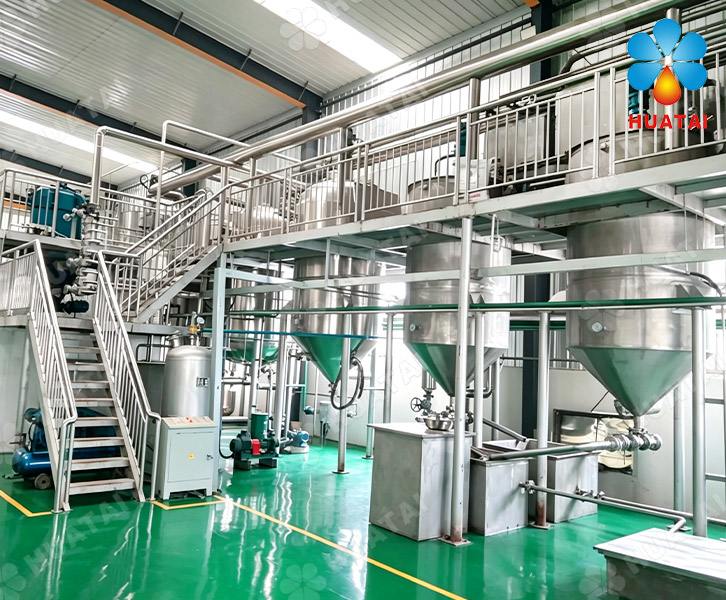
1–20 tons/day; suitable for small or specialty oil mills.
Low equipment investment; simple machinery and minimal facility requirements. Batch-based processing:
degumming, deacidification,
bleaching, and deodorization are completed in a single vessel before the next batch begins; involves frequent heating and cooling cycles.
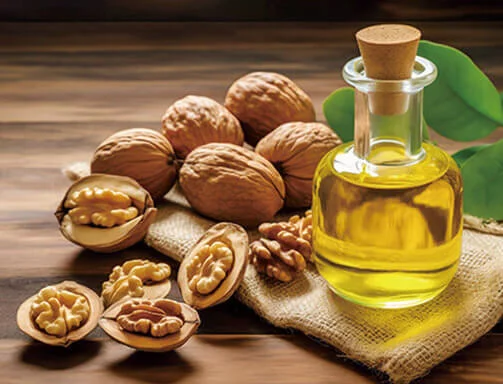
Highly flexible regarding oil types; easy to switch between rapeseed, peanut, coconut, palm, and animal oils; simple cleaning between varieties; suitable for high-value niche oils like tea seed and walnut oil.
Labor-intensive; variations in temperature, alkali dosage, and timing per batch lead to fluctuations in product specifications, though manual fine-tuning allows for adjustments based on varying crude oil quality.
Refining loss of 5–8%; some oil remains in the residue and during vessel cleaning.
High energy consumption; repeated heating and cooling per batch results in high steam usage and no heat recovery.
High labor requirement; skilled operators must monitor the reaction endpoint and perform sampling/testing for each batch.
Prolonged exposure to high temperatures in the deodorizer promotes oxidation; unsuitable for heat-sensitive oils.
Ideal for multi-variety/small-batch production, handling raw materials with fluctuating quality, processing specialty oilseeds, and fulfilling small export orders.
Large-Scale Fully Continuous Refining
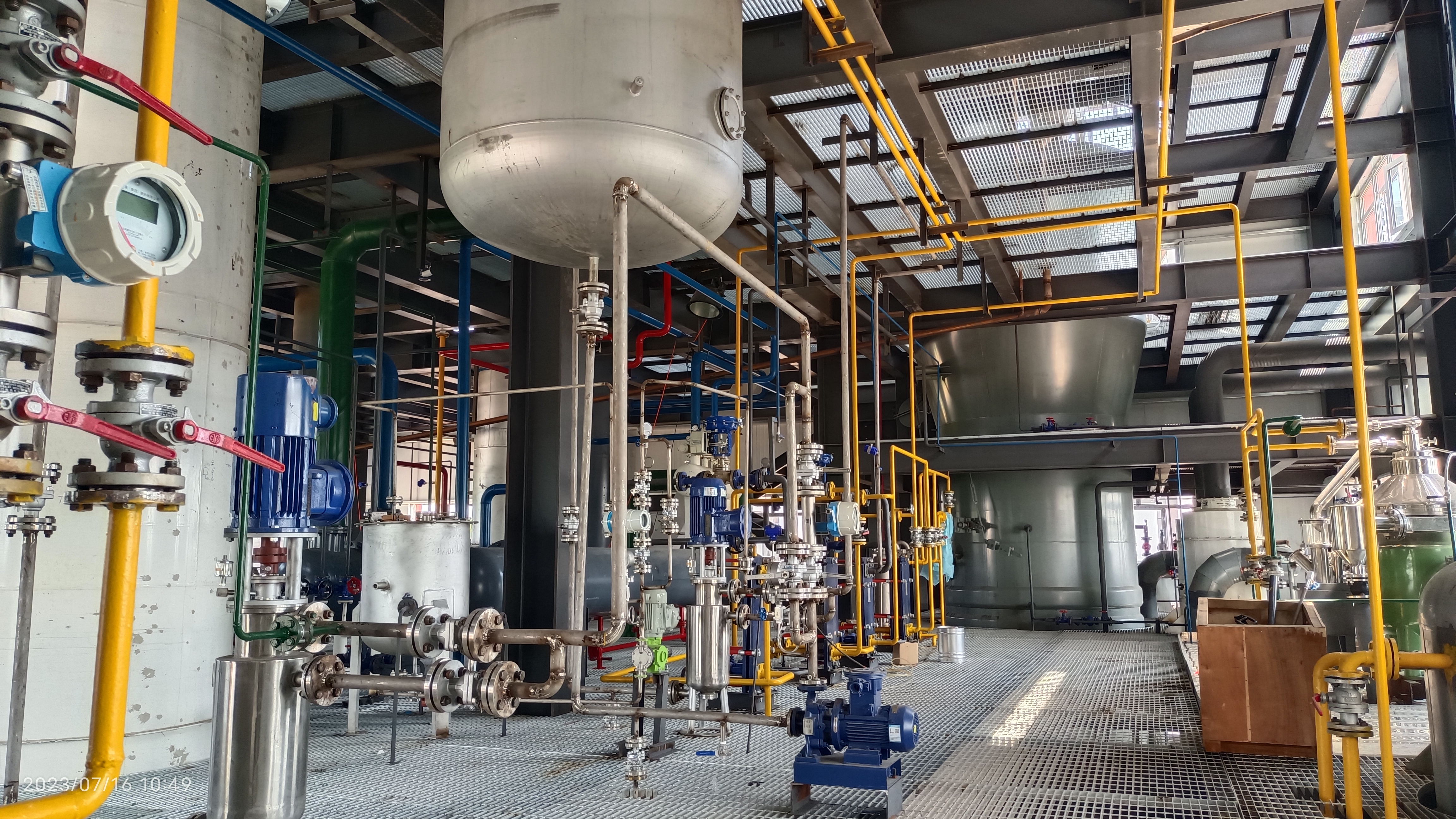
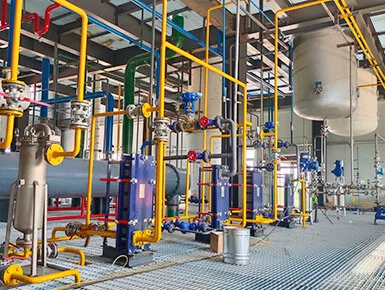
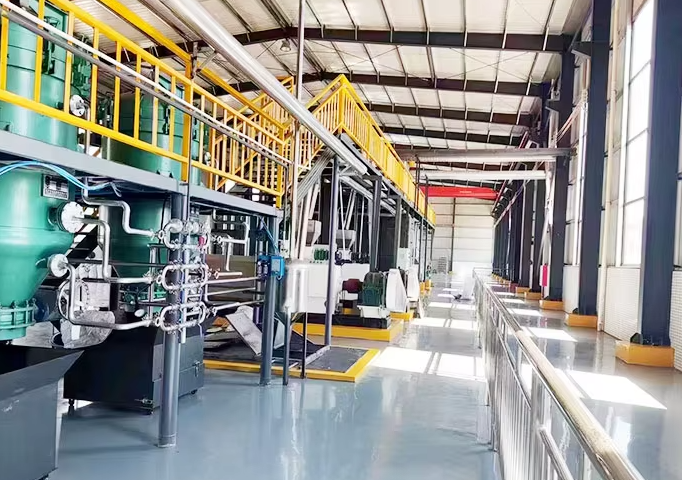
Starts at ≥30 tons/day; suitable for large-scale plants processing tens to hundreds of tons daily. High investment; requires complex tower, centrifugal, and heat exchange systems, as well as tall facilities and robust steam/vacuum infrastructure.
Uses sealed piping and towers; continuous material flow with simultaneous processing stages; incorporates heat recovery. Best suited for a single, fixed oil type; switching oil types involves massive cleaning efforts for pipelines and towers, resulting in high transition costs.
PLC-based automatic closed-loop control ensures precision in flow rates, temperature, alkali dosage, and bleaching earth addition; consistent product quality across batches, ideal for mass-market commodity oils.
Refining loss of 1–3%; sealed, continuous centrifugal separation minimizes loss and maximizes oil yield. Features multi-stage waste heat recovery (using heat from the hot finished oil to preheat incoming crude oil), resulting in lower energy consumption per ton compared to batch processing. 15–25%.
High level of automation; requires significantly less labor for the same output, focusing mainly on instrument monitoring and equipment inspection. Oil forms a thin film inside the deodorization tower; short residence time at high temperatures minimizes oxidation risk, allowing for better control of the finished oil's peroxide value.
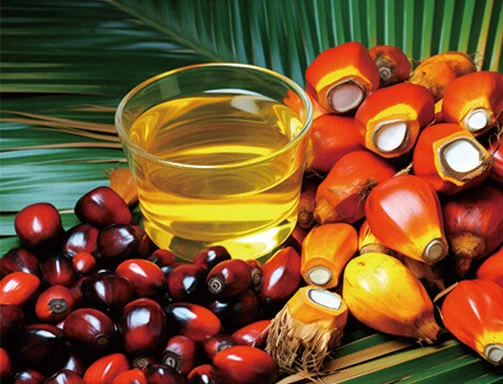
Suitable for large-scale mass production with stable raw material supplies; primarily targets commodity oils (soybean oil, palm oil, rapeseed oil).
Drawbacks of batch refining
Limited output; fulfilling large orders requires operating multiple refining kettles simultaneously;
Significant influence of human factors; operator skill directly determines the quality of the finished oil;
High steam consumption and high processing costs per ton of oil;
Prolonged exposure to high temperatures; heat-sensitive oils (e.g., flaxseed oil, walnut oil) are prone to discoloration and off-flavors.
Drawbacks of fully continuous refining
Huge initial investment; requires a stable and sufficient supply of crude oil—cannot operate intermittently; frequent startups and shutdowns result in significant losses;
Unsuitable for frequent switching between oil types;
Low tolerance for fluctuations in crude oil quality; requires upstream pretreatment if acid values or gum content vary significantly;
Complex equipment; high requirements for maintenance, spare parts, and technical personnel.
Simple selection guide
Daily processing < 20 tons; frequent oil type changes; producing specialty oils or small-batch export orders → Prioritize batch refining
Daily processing 20–50 tons; seeking a balance between output and flexibility → Semi-continuous (continuous deodorization tower, batch processing for earlier stages)
Daily processing > 30 tons; processing 1–2 fixed mainstream oil types; prioritizing low costs and consistent quality → Fully continuous refining