Rice Bran Oil Processing Places Higher Demands on Front-End Pretreatment
A rice bran oil production line is not merely a collection of oil-extraction equipment; rather, it requires a holistic approach that aligns front-end pretreatment and subsequent processing stages with the specific characteristics of the rice bran raw material.
Once rice bran enters the processing system, it must undergo appropriate pretreatment based on its condition to meet the requirements of the subsequent oil-extraction process. If the processing capacity of the pretreatment system is not well-matched with that of the solvent-extraction section, the continuous operation of the entire production line may be compromised.
Therefore, when developing a 500 TPD (tons per day) rice bran oil project, the pretreatment system must be planned comprehensively—taking into account the state of the raw rice bran, daily processing capacity, the downstream solvent-extraction process, plant layout, conveying systems, and refining facilities—rather than selecting individual pieces of equipment in isolation.
For grain and oil processing enterprises, front-end pretreatment serves as a critical link between the raw material and the subsequent oil-extraction process. Only when the material condition and processing capacity are effectively integrated with the downstream stages can the conditions for continuous production be established.
A 500 TPD Rice Bran Oil Production Line Requires Seamless Integration Between Processing Stages
From the perspective of an entire plant project, rice bran oil processing involves multiple production phases.
The basic process flow can be summarized as follows:
Rice Bran Raw Material → Pretreatment → Solvent Extraction → Mixed Oil Processing → Crude Oil Processing → Refining → Finished Oil
In this sequence, pretreatment creates stable material conditions for oil extraction; the solvent-extraction section handles the actual extraction of the oil; and the refining section processes the crude oil further to meet specific product requirements.
For a project with a 500 TPD capacity, ensuring that the processing capacities of all stages are well-matched is particularly important. If there is a significant disparity in capacity between successive stages, issues such as material bottlenecks, backlogs, or underutilization of equipment can arise—even if individual machines are highly capable.
Consequently, during the project design phase, factors such as raw material handling capacity, solvent-extraction capacity, crude oil processing capacity, refining capacity, and utility infrastructure must all be considered in an integrated manner.
This highlights a key distinction between procuring a complete, integrated grain and oil processing system versus purchasing individual pieces of equipment. For a full-plant project, the core challenge is not merely whether individual pieces of equipment function correctly, but whether various machines and production stages can be integrated into a cohesive, continuous production system.
Integrated Planning for Extraction and Refining
In rice bran oil processing, extraction and refining serve distinct functions, yet they are intrinsically linked within the overall production workflow.
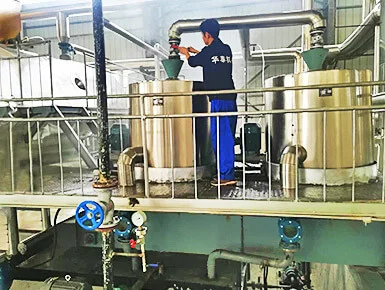
The extraction system encompasses oil extraction, treatment of the oil-solvent mixture (miscella), and solvent recovery. The subsequent refining system must be configured based on the characteristics of the crude oil and the specific requirements for the final product.
Consequently, if a rice bran oil processing project is planned by focusing solely on individual extraction or refining units—rather than considering the entire production line—it may lead to capacity mismatches between different pieces of equipment during implementation.
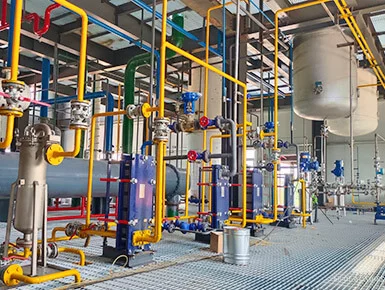
The 500 TPD (tons per day) rice bran oil project in Shayang, Jingmen, Hubei, was developed with an integrated approach, encompassing pretreatment, extraction, refining, and dewaxing processes.
For enterprises planning to build a rice bran oil production line, defining raw material specifications, target capacity, and product requirements at the outset is essential for establishing an optimal configuration of processes and equipment.
Why Dewaxing Matters in Rice Bran Oil Refining?
Whether to include a dewaxing process in rice bran oil refining depends on the characteristics of the crude oil, the intended product positioning, and the chosen processing route.
Dewaxing is not simply the addition of a single piece of equipment; it is an integral component of the refining system. Therefore, the appropriate refining route must be determined during the initial project design phase, based on specific product requirements.
Rice bran oil processors must clarify product grades, quality targets, and the necessity of a dewaxing process during the project planning stage, while also ensuring seamless coordination between different production stages.
Ultimately, the configuration of equipment for a rice bran oil production line cannot be determined in isolation from product requirements. Only by first establishing the processing route—and then selecting equipment to support that route—can a well-integrated and efficient production system be created.


的hi品安全(可重置-封面_副本.jpg)

.jpg)